

Understanding Wire Gauges
Wire gauge is an important specification for any wire component because it directly relates to the wire’s diameter. The selected gauge can affect a part’s strength, flexibility, weight, forming characteristics, and ability to fit within an assembly. For manufacturers producing a custom wire form, selecting the appropriate wire size is an important part of achieving the required dimensions and performance.
What Is a Wire Gauge?
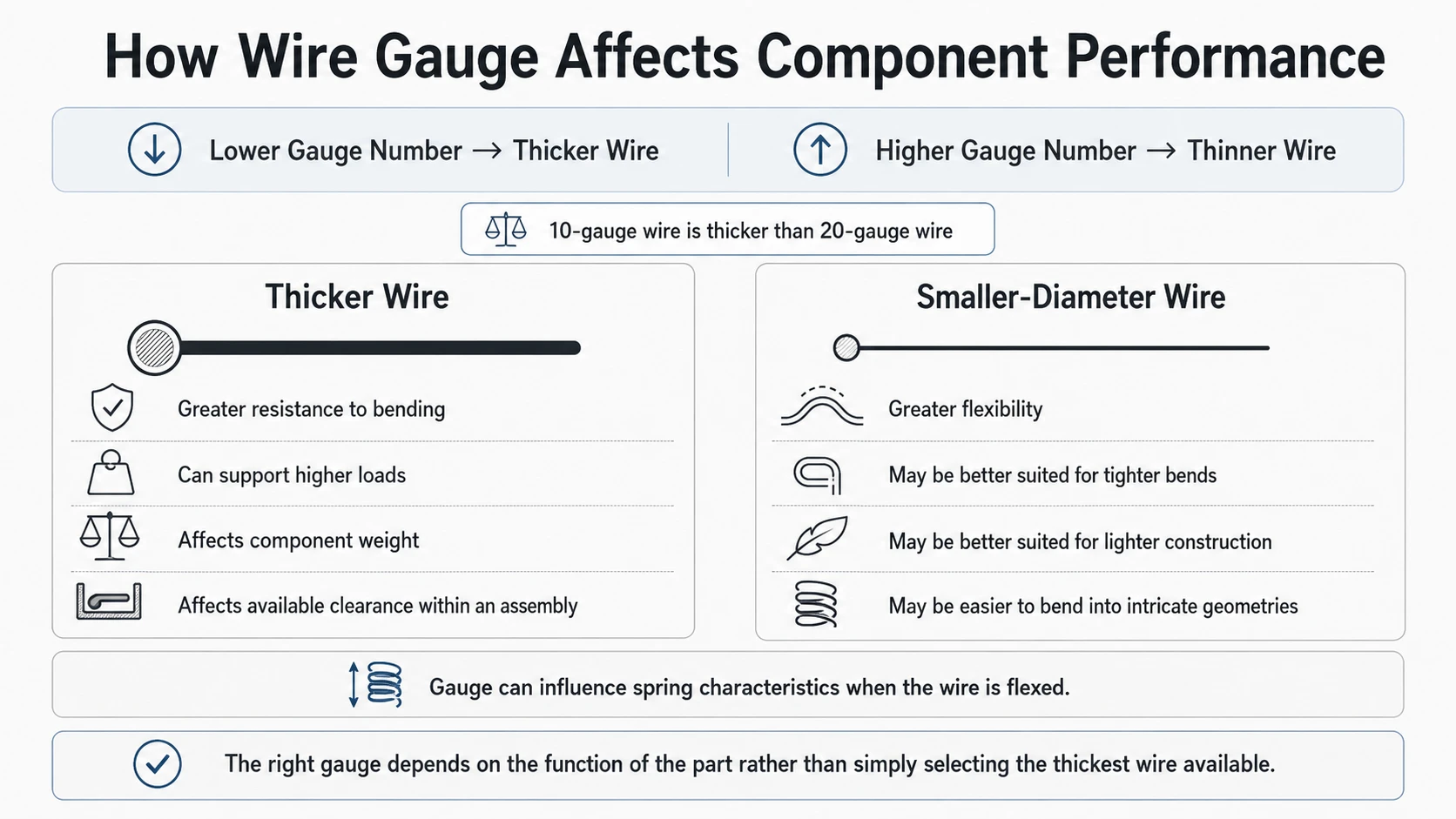
Wire gauge identifies the thickness of a wire, but the numbering system can seem counterintuitive at first. In common gauge systems, a lower gauge number indicates thicker wire, while a higher gauge number indicates thinner wire. For example, a 10-gauge wire is thicker than a 20-gauge wire.
Because gauge standards can vary by material and application, specifying the actual wire diameter along with the gauge can provide greater clarity. This gives manufacturers a precise starting point for material selection and production.
How Wire Thickness Affects Performance
Wire diameter plays a direct role in how a finished component performs. Thicker wire generally provides greater resistance to bending and can support higher loads. Smaller-diameter wire can provide greater flexibility and may be better suited for parts requiring tighter bends or lighter construction.
Other considerations include:
- Strength: Wire diameter can affect a component’s ability to withstand applied loads.
- Flexibility: Smaller wire may be easier to bend into intricate geometries.
- Spring characteristics: Gauge can influence how a wire responds when flexed.
- Weight and fit: Wire thickness affects both component weight and the available clearance within an assembly.
The right gauge depends on the function of the part rather than simply selecting the thickest wire available.
Choosing the Right Wire Gauge for a Custom Part
Before selecting a wire gauge, consider the part’s required load, geometry, bend radius, material, dimensions, and production volume. The number and severity of bends also matter, since certain wire sizes and materials may have limitations during forming.
For manufacturers using CNC wire forming services, these specifications help establish the appropriate tooling and machine setup for repeatable production. Providing complete part drawings and material requirements can also help identify potential manufacturing concerns before production begins.
Wire Gauge and Manufacturing Processes
Wire gauge also has a direct connection to the manufacturing process used to produce the finished component. CNC wire forming services can produce repeatable bends, hooks, loops, curves, clips, and other wire geometries based on specific part requirements.
Wire EDM takes a different approach. Wire EDM machining services use a continuously moving wire electrode to cut electrically conductive materials with precision. This process can support the production of tooling, dies, fixtures, and other precision components used alongside wire forming operations.
For Cove Four/Cove West, combining wire forming capabilities with precision manufacturing support can help address different requirements throughout the production process.

Practical Considerations When Specifying Wire
A gauge number alone may not provide enough information for production. Give your manufacturer the complete specifications needed to evaluate the part and select appropriate materials and processes.
Key details may include:
- Wire gauge and diameter
- Material and temper
- Finished part dimensions
- Tolerances
- Bend locations and radii
- Surface finish or coating requirements
- Expected production quantities
Clear specifications reduce uncertainty and help keep production aligned with the intended part design.
Gauge Is One Part of the Bigger Picture
Wire gauge is an important starting point, but it is only one factor in producing a reliable wire component. Material, geometry, tolerances, bend requirements, and the intended application all influence the final result.
If you need a custom wire form or are determining the right wire size for a production component, working with an experienced manufacturer can help you make practical decisions before production begins. Cove Four/Cove West can support wire forming and precision manufacturing requirements based on your project specifications. Get in touch with Cove Four/Cove West today!