

Bright Basic Wire vs. Galvanized Wire
Choosing the right wire starts with the application. Bright basic wire and galvanized wire may look similar at a glance, but they perform differently once they are put to work. If a part will stay indoors and needs to be formed efficiently, bright basic wire may be the practical choice. If it will face moisture, weather, or outdoor storage, galvanized wire is often the better fit. For manufacturers and buyers sourcing custom wire forms, fabricated parts, or metal components, that difference matters. The wire finish affects cost, corrosion resistance, service life, and long-term product performance.
What Is Bright Basic Wire?
Bright basic wire is unfinished steel wire without a protective zinc coating. It is commonly used in indoor applications where rust resistance is not the main concern. For parts that need to be bent, shaped, cut, or formed into custom products, bright wire is often a cost-effective option. It works well for wire forms, clips, handles, packaging components, and other fabricated parts used in dry environments. If the product is staying indoors and the focus is efficient production, bright basic wire can be a solid material choice.
What Is Galvanized Wire?
Galvanized wire is steel or iron wire coated with zinc to help resist rust and corrosion. That added protection makes galvanized wire a strong option for outdoor and moisture-prone applications. It is often used in landscaping, construction, agriculture, utility products, and fabricated wire components that need to hold up over time. You may also see buyers search for iron wire galvanized when sourcing corrosion-resistant wire products. In many cases, iron wire galvanized is simply another way of referring to zinc-coated wire intended for tougher service conditions.
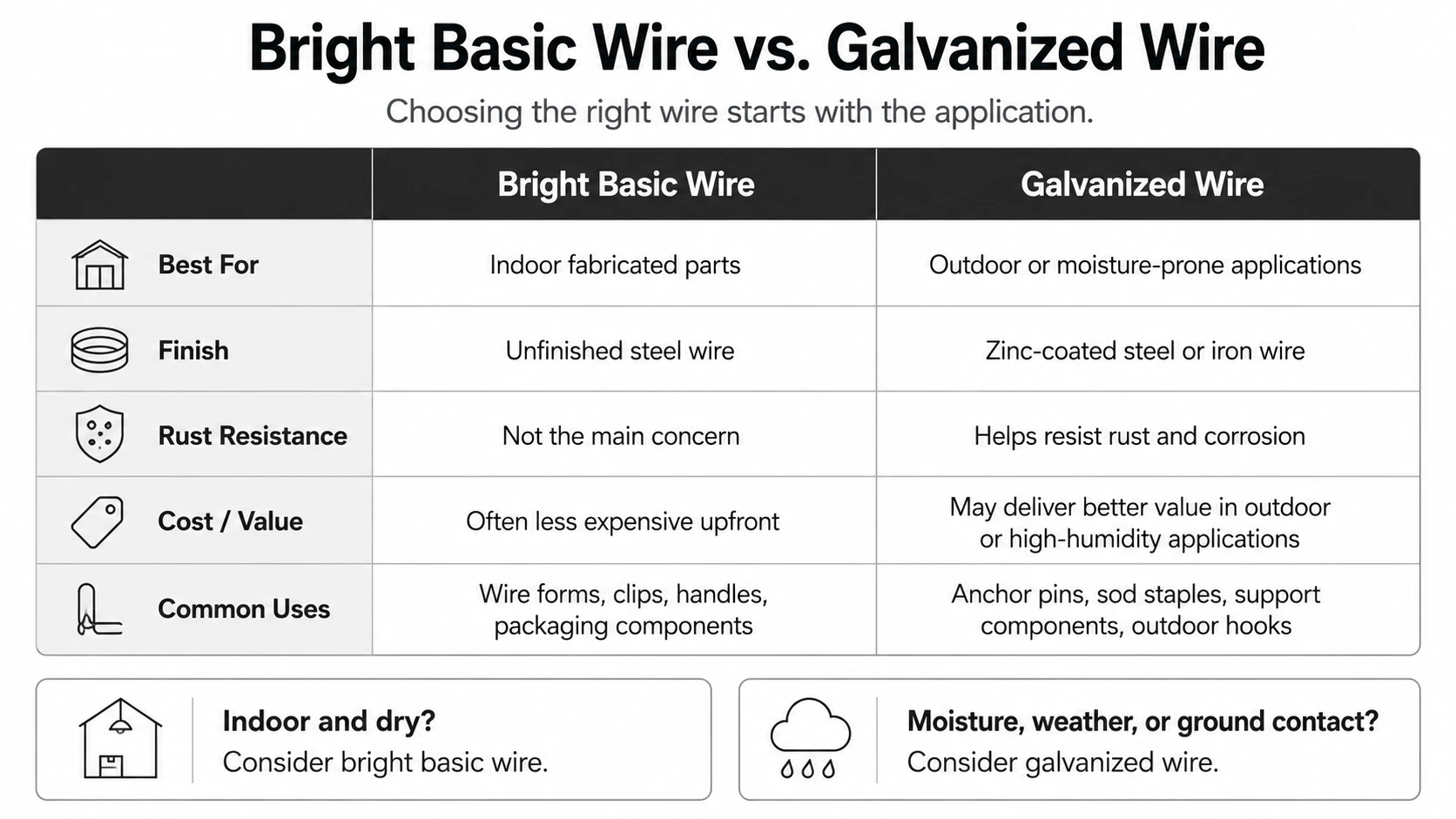
Bright Basic Wire vs. Galvanized Wire: Key Differences
The biggest difference between bright basic wire and galvanized wire is exposure tolerance. Bright wire is better suited for dry, controlled settings. Galvanized wire is built for conditions where moisture and rust are real concerns. There is also a cost difference. Bright wire is often less expensive upfront, while galvanized wire may deliver better value in outdoor or high-humidity applications because it can last longer in service. Appearance is another factor. Bright wire has a plain metallic finish, while galvanized wire has the look of a coated product built for added protection.
Applications for Bright Basic Wire
Bright basic wire is a practical option for indoor fabricated parts and custom wire forms that do not need corrosion resistance. It is often used for display components, packaging-related products, clips, handles, and general formed wire parts. For buyers looking to control material cost while still getting a dependable wire product for indoor use, bright basic wire often makes sense.

Applications for Galvanized Wire and Galvanized Steel Wire Mesh
Galvanized wire is commonly used for anchor pins, sod staples, support components, outdoor hooks, and other products that need better protection against rust. It is also a strong choice for applications exposed to weather, damp storage, or ground contact. In some projects, customers may compare galvanized wire with galvanized steel wire mesh if the application involves barriers, screening, containment, or reinforcement. Galvanized steel wire mesh is often used where a structured wire product is needed for outdoor performance. Buyers comparing iron wire galvanized products may also be looking at galvanized steel wire mesh for the same reason: longer service life in demanding conditions.
Rust Never Rests. Your Wire Should Be Ready.
Whether you need bright basic wire for indoor components or galvanized wire for products built to handle tougher conditions, Cove West can help you source the right material for the job. From custom wire forms to fabricated metal parts, our team works with you to match the wire type, finish, and production requirements to your application. Contact Cove West to discuss your next project and get a wire solution built for performance from the start.